
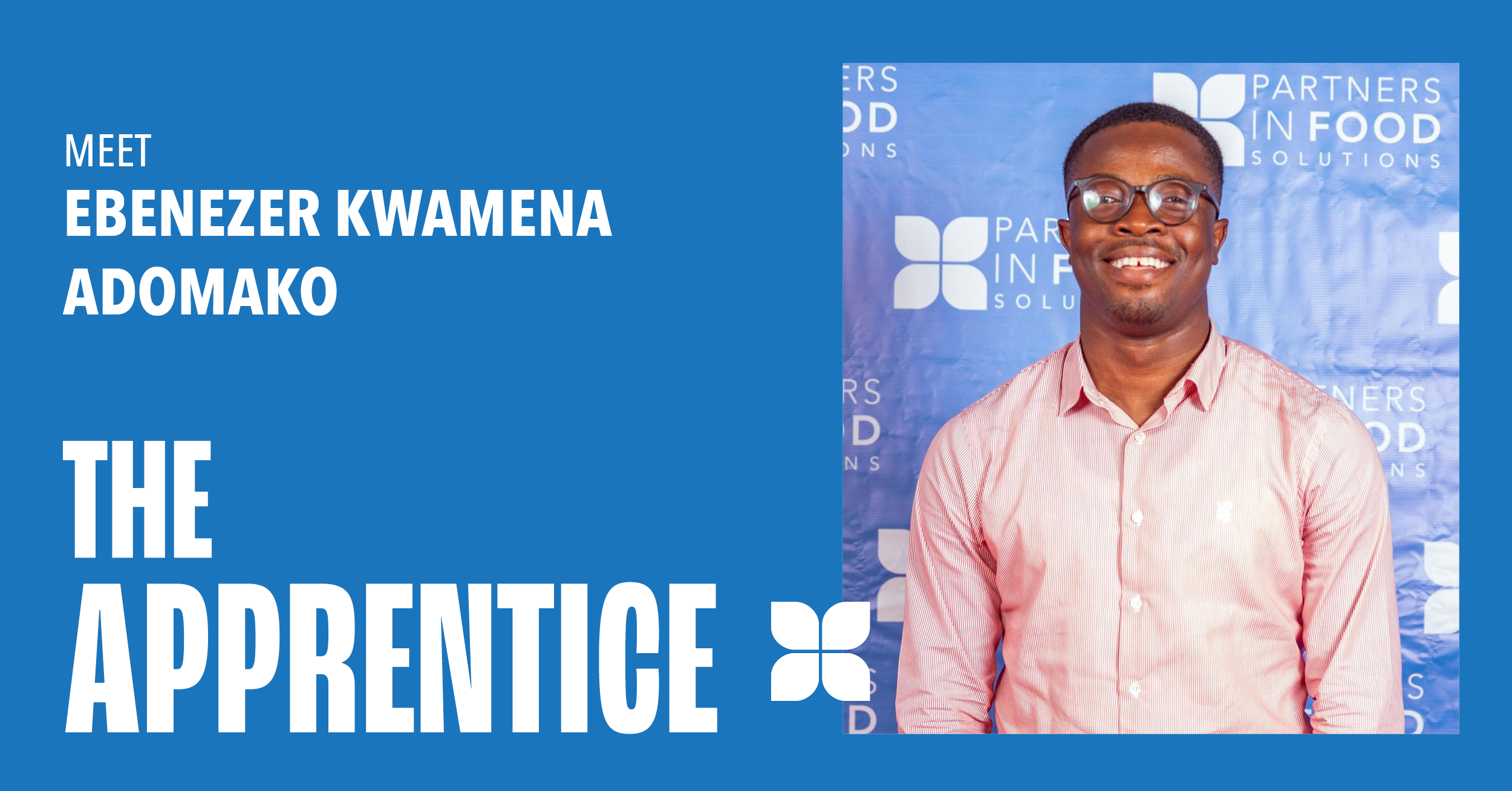
From Apprentice to Quality Assurance Leader: Ebenezer’s Journey
In 2019, Ebenezer Kwamena Adomako began his journey with Partners in Food Solutions (PFS) as an apprentice placed at Juaben Oil Mills in Ghana. At the time, he held a bachelor’s degree in molecular biology and biotechnology from the University of Cape Coast and was eager to gain meaningful, hands-on experience in the food industry.
The apprenticeship proved transformative.
Reflecting in his exit survey, Ebenezer shared, “Having left school in pursuit for a great on the job experience, this program did beyond that and has helped me in identifying some great opportunities in the food industry.” His time at Juaben Oil Mills gave him not only technical exposure, but also a practical understanding of the systems that underpin a successful food business.
Through the placement, he deepened his appreciation for structured quality systems, noting, “I gained the understanding of the importance of having a quality management system implemented as part of operations in a food industry.” He also gained firsthand insight into the constraints many food companies face, explaining, “I experienced the basic challenges faced by most food industries in trying to meet regulatory standards without the availability of expertise and adequate resources.”
In addition, Ebenezer developed practical skills in workplace safety, sharing, “I also learned how best to establish an effective Health and Safety system taking an industry’s available resources into account.” These lessons would become foundational to his career.
Following the apprenticeship, Juaben Oil Mills retained Ebenezer, recognizing the value he brought to the organization. He later continued building his expertise at Premium Foods Limited—another PFS client—where he has worked for the past three years. He previously served as Quality Systems and Quality Assurance Supervisor and has recently transitioned into the role of Quality Assurance Manager. In this capacity, he supports the organization to ensure its processes and products consistently meet required specifications.
Ebenezer’s journey reflects the power of applied learning and industry partnership. What began as an apprenticeship has evolved into a leadership role in quality assurance—strengthening both his professional path and the companies he supports.
A Decade of Dedication: Rose Barry’s Remarkable Commitment to COMACO and PFS
For more than a decade, General Mills scientist Rose Barry has been a steady, trusted partner to PFS clients—bringing technical expertise, encouragement, and an unwavering commitment that has shaped their growth. But there is one company that has been at the center of her efforts – COMACO, a Zambian processor who makes a variety of natural food products. Since 2018 alone, Barry has supported COMACO through 36 individual services, from project leadership to specialized R&D guidance. Her deep, sustained involvement reflects not only her personal dedication, but the powerful impact a single volunteer can make through Partners in Food Solutions.
Barry’s long-term partnership has helped COMACO navigate challenges in product development, equipment decisions, and food safety—always with the steady hand of someone who knows how to translate complex science into practical solutions. And as COMACO continues strengthening its operations, Barry remains a constant presence, exemplifying the spirit of collaboration at the heart of PFS.
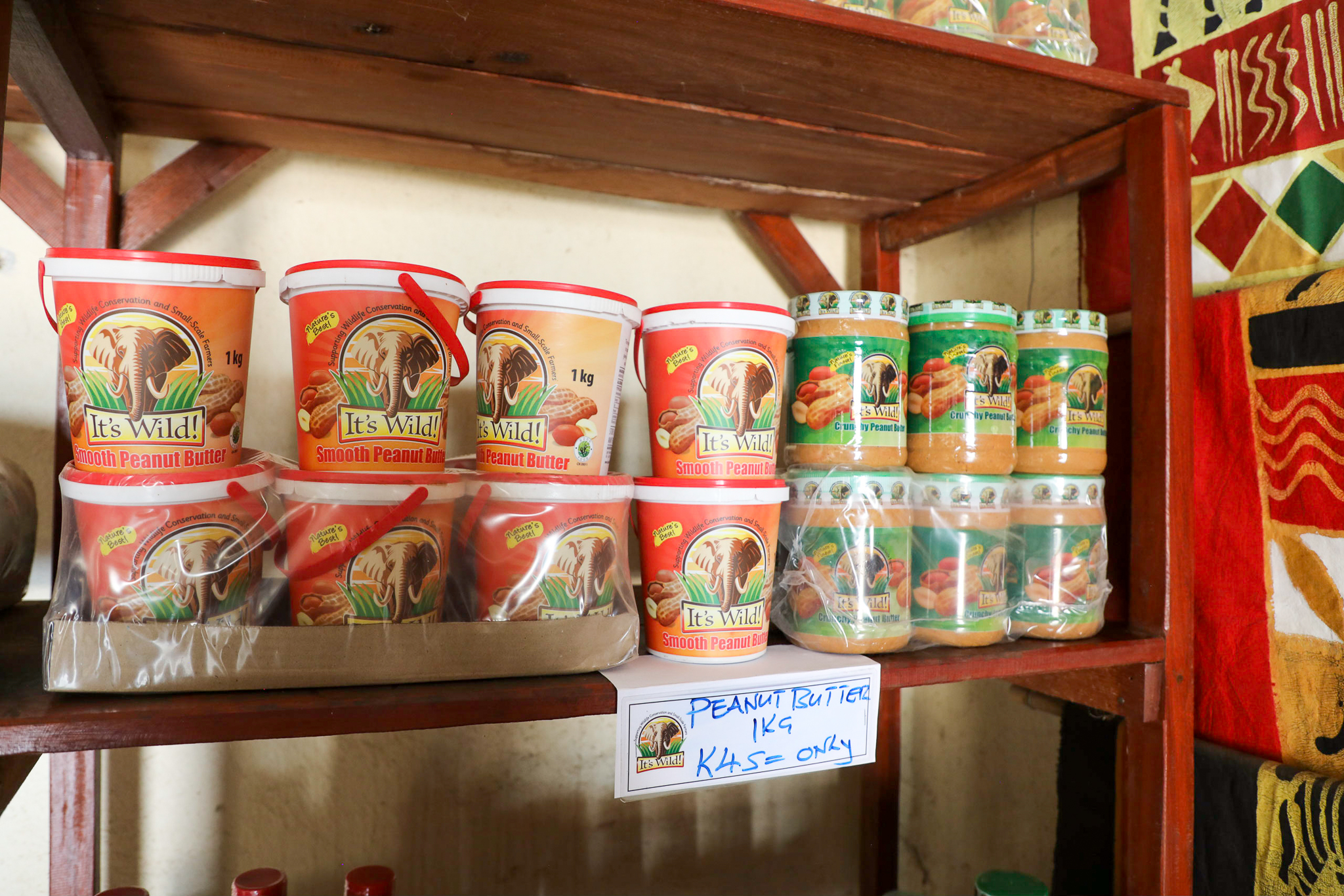
COMACO and Partners in Food Solutions go way back: In fact, the Zambian food processing company was PFS’s first client. Since then, volunteers have helped COMACO solve a variety of business and food processing challenges. Stuart Hall, chief operating officer at COMACO, said their strength is making things “the way products used to be made” – minimalistic, additive free, and high quality. COMACO’s farmers use sustainable or regenerative methods to grow the crops that the company then processes into products like peanut butter.
“Having the expertise of large organizations really helps us to develop an understanding of what we need to do, whether it’s what equipment are we going to buy, how we are processing, challenges that we have from food safety issues,” Hall said of working with PFS volunteers from companies like General Mills.
Barry herself is a perfect example—her breadth of expertise embodies the very support Hall describes. Having worked on many General Mills products during her 18-year career, Barry considers herself a “breadth person” – someone who knows a little about a lot of different facets of food processing. This has made her extremely valuable to COMACO, because she can provide insight on a wide range of topics.
“In an area where businesses are less developed, it really felt like I was adding more value to people with what I knew,” Barry said. “The world is smaller than we think. You want to help locally when we can, and I do do that. But I feel like I have a greater impact overall when I volunteer with PFS.”
She’s also leveraged her experience to progress her career at General Mills. When Barry first began volunteering, she was interested in a global role. PFS helped her get there.
“I thought if I can help share my expertise with somebody, that sounds great,” Barry said. “I was also personally really interested in a future role in a more global, international part of the company – maybe if I do this with PFS it will give me more empathy for the global consumer and I can leverage that in my development also.”
Hall said working with Barry energized his team and kept them accountable to their own goals, ensuring projects progressed on time. While COMACO is interested in expanding the reach of its exports as consumers in higher-income countries become increasingly discerning about the origin of products they buy, Hall said they don’t currently operate at a scale that would make that plausible. But working with PFS allows his team to see what’s possible, he said.
“If we look at what we do in comparison to General Mills in terms of scale of a product, it’s a massive learning experience for us to understand that there’s General Mills factories out there that turn over billions not millions, and the potential for COMACO to one day get to those levels as well,” Hall said.
Uganda’s Pristine Foods Builds New Product Line with Help from Cargill
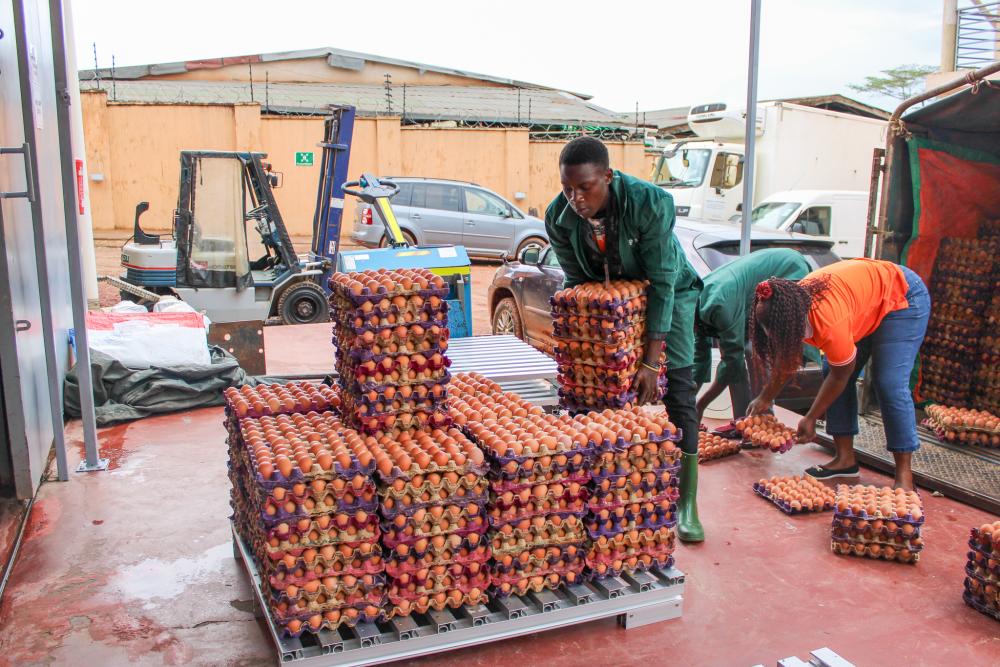
Pristine Foods has been growing at a fast clip since its founding in 2019. They’ve leveraged the expertise of PFS volunteers to grow their egg processing business, developing powdered and pasteurized liquid egg. Then, they set their sights on a new business line: a mayonnaise product.
The Ugandan company benefited from Cargill expertise through Partners in Food Solutions throughout the entire process, from planning the factory equipment to trialing production techniques and the shelf life of its mayonnaise.
The first step towards establishing the new product was identifying, securing, and installing the proper equipment. Shane Thome, a packaging manufacturing lead at Cargill, used his skills to help Pristine Foods determine what equipment would be the best fit for their business goals and factory space, as well as safety practices.
Thomas helped the Pristine Foods team write a clear proposal outlining what the company was looking for, to bid out to potential suppliers.
“We were more the plan builders for them to make sure that they didn’t miss something that could be critical for their process,” Thomas said. “Once they got to that point where they had the right design for their equipment, they had an acceptable price, and acceptable delivery and installation, then we felt like they were in a position where they could execute against that plan.”
Once the equipment was installed, another team of Cargill volunteers stepped in for the next part of mayonnaise development: selecting a process and formulation for the product. Aline Gomes Oliveira, a food product and process specialist at Cargill, works on mayonnaise and other dressing products. She guided Pristine Foods on best practices, building local technical capacity.
Gomes Oliveira helped Pristine Foods fine tune the equipment to the right settings, as well as reviewing recipes to determine what ingredients, like starches and emulsions, worked best. They collaborated to develop a repeatable mayonnaise production method that would meet food safety standards and provide an appealing tasting-product to consumers.
“As Cargill, a big company, we have a lot of resources. I’ve learned so much with Pristine because they don’t have as many resources. They want to learn, they want to know how to process [their product],” Gomes Oliveira said. “I’ve learned with them that it is good to adapt and be flexible with the resources that we have.”
Another key project, with trials still underway, is helping extend the shelf life of the mayonnaise product. Gomes Oliveira provided guidance on how to adjust the formula so it remains shelf stable for longer periods of time.
Because Pristine Foods doesn’t have controlled temperature facilities, the tests are taking place using warehouse conditions. They are testing three batches of mayonnaise, using a tracking system that will record changes in quality to ensure the final product is safe and high quality.
Thomas said he learned a lot about clear communication as a PFS volunteer. He’d love to see more opportunities for his Cargill colleagues to volunteer with PFS, leveraging their diverse array of skills towards solving challenges for African food processors.
Joel Guma, managing director for Pristine Foods envisions their company needing future support as it grows the mayonnaise and powdered egg business lines.
“We want to grow those categories, in Uganda and beyond. We’re hoping to quadruple or grow five times within the next five years with these products. That is going to call for a lot of human capital development, particularly on site,” Guma said. “I can’t think of anybody else who can help us on all those fronts other than the partners within PFS.”

The Apprentice: Jackson Silwima
“During my apprenticeship at COMACO, I served as a food safety and quality control officer. This role provided me with invaluable hands-on experience, and at the end of my apprenticeship, I was offered a full-time position as a quality assurance officer. In this capacity, I continue to apply the skills and knowledge I gained, ensuring the highest standards of food safety and quality.
A particularly challenging but fulfilling project I tackled during my apprenticeship was the implementation of a Hazard Analysis and Critical Control Points (HACCP) system in COMACO's processing facility. This task involved identifying potential hazards, developing control measures, and training staff on the new procedures. We overcame these challenges through thorough risk assessments, collaborative efforts with the production team, development of effective control measures, and continuous staff training. Regular monitoring and adjustments ensured the system’s ongoing success. Witnessing tangible improvements in safety and quality was really satisfying for me.
The support and guidance from my supervisors at COMACO were exceptional. They provided regular feedback, offered professional development opportunities, and fostered a collaborative work environment, which greatly contributed to my growth.
The mentorship program PFS offered me was another highlight of my apprenticeship. My mentor @Jonathan Richardson of the @J.M. Smucker Co. was highly experienced and supportive, imparting knowledge that has been instrumental in my success in the food industry.”

The Apprentice: Dorcas Olawunmi Olayioye
Dorcas Olawunmi Olayioye was placed as a food safety and product development apprentice at Fastizers Foods and Confectionery Ltd in Nigeria.
As an enthusiastic food science (MSc) graduate with limited manufacturing experience, she found that the apprenticeship allowed her to apply her academic training in food safety, research and development, product formulation and optimization, market research, sensory testing, surveys, packaging development, and the use of Microsoft Office tools. She also gained a deeper understanding of the complex balance between profit-making and maintaining food quality and safety in a manufacturing environment.
During her apprenticeship, she was tasked with improving Fastizers’ hygiene culture. With strong support and clear guidance from management, she successfully led and facilitated the development of a facility-specific sanitation program while monitoring and training employees—efforts she carried out despite challenging economic factors.
She received immense support from PFS’ Program Director Vivian Maduekeh, who was always accessible and offered valuable learning opportunities. Vivian provided the technical resources Dorcas needed to succeed and served as a mentor, helping her navigate the balance between her passion for food safety and the economic realities of food manufacturing. Her line manager, Samuel Oparinde, also played a pivotal role by helping her build confidence in product development.
The year-long experience gave her a comprehensive foundation for navigating the food industry as a food scientist. Though intense, it offered her the chance to “fly,” demonstrating her theoretical knowledge and skills and leaving a sustainable impact on the company. In the years since, she has continued to build on the skills, knowledge, and relationships gained through the program—growth that has led to her current role as a sanitation supervisor at The Little Potato Company in Canada.