
Uganda’s Pristine Foods Builds New Product Line with Help from Cargill
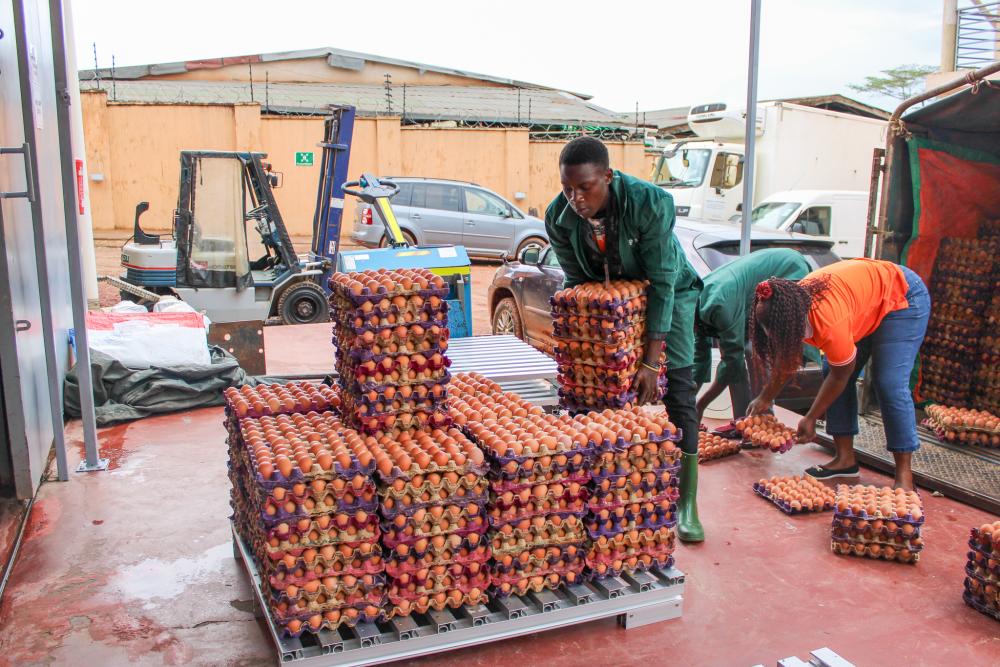
Pristine Foods has been growing at a fast clip since its founding in 2019. They’ve leveraged the expertise of PFS volunteers to grow their egg processing business, developing powdered and pasteurized liquid egg. Then, they set their sights on a new business line: a mayonnaise product.
The Ugandan company benefited from Cargill expertise through Partners in Food Solutions throughout the entire process, from planning the factory equipment to trialing production techniques and the shelf life of its mayonnaise.
The first step towards establishing the new product was identifying, securing, and installing the proper equipment. Shane Thome, a packaging manufacturing lead at Cargill, used his skills to help Pristine Foods determine what equipment would be the best fit for their business goals and factory space, as well as safety practices.
Thomas helped the Pristine Foods team write a clear proposal outlining what the company was looking for, to bid out to potential suppliers.
“We were more the plan builders for them to make sure that they didn’t miss something that could be critical for their process,” Thomas said. “Once they got to that point where they had the right design for their equipment, they had an acceptable price, and acceptable delivery and installation, then we felt like they were in a position where they could execute against that plan.”
Once the equipment was installed, another team of Cargill volunteers stepped in for the next part of mayonnaise development: selecting a process and formulation for the product. Aline Gomes Oliveira, a food product and process specialist at Cargill, works on mayonnaise and other dressing products. She guided Pristine Foods on best practices, building local technical capacity.
Gomes Oliveira helped Pristine Foods fine tune the equipment to the right settings, as well as reviewing recipes to determine what ingredients, like starches and emulsions, worked best. They collaborated to develop a repeatable mayonnaise production method that would meet food safety standards and provide an appealing tasting-product to consumers.
“As Cargill, a big company, we have a lot of resources. I’ve learned so much with Pristine because they don’t have as many resources. They want to learn, they want to know how to process [their product],” Gomes Oliveira said. “I’ve learned with them that it is good to adapt and be flexible with the resources that we have.”
Another key project, with trials still underway, is helping extend the shelf life of the mayonnaise product. Gomes Oliveira provided guidance on how to adjust the formula so it remains shelf stable for longer periods of time.
Because Pristine Foods doesn’t have controlled temperature facilities, the tests are taking place using warehouse conditions. They are testing three batches of mayonnaise, using a tracking system that will record changes in quality to ensure the final product is safe and high quality.
Thomas said he learned a lot about clear communication as a PFS volunteer. He’d love to see more opportunities for his Cargill colleagues to volunteer with PFS, leveraging their diverse array of skills towards solving challenges for African food processors.
Joel Guma, managing director for Pristine Foods envisions their company needing future support as it grows the mayonnaise and powdered egg business lines.
“We want to grow those categories, in Uganda and beyond. We’re hoping to quadruple or grow five times within the next five years with these products. That is going to call for a lot of human capital development, particularly on site,” Guma said. “I can’t think of anybody else who can help us on all those fronts other than the partners within PFS.”